Kitchen cabinet refacing in Tampa Bay.
Refacing keeps the cabinet boxes and changes everything you can see. New doors. New drawer fronts. A new skin glued over every side and face frame. Done right, it looks like a new kitchen at a fraction of the cost. Done badly, the skin lifts at the edges within a year. The difference is in the glue, the prep, and the box you start with.
Priced by written scope, never by the hour.

What the new skin is glued to.
Refacing pages show you door samples. None of them talks about the edge of the box, which is where a reface fails. Here is what to ask before you hire anyone, including us.
Most boxes are particleboard
Under the old finish, most cabinet boxes are particleboard or MDF. Both swell when they get wet. The bottom edge of the sink base is the worst spot. A skin glued over a swollen edge follows the bump. Ask what the boxes are made of before you agree to a reface.
Steam and grease live where the skin starts
The face frame next to the range takes heat, steam and grease every day. That is exactly where a veneer or laminate edge begins. If the frame is not cleaned to bare, sound material, the glue holds the grease, not the wood. Ask how the frames are prepped.
Veneer, laminate or thermofoil
Real wood veneer takes stain and looks like wood, because it is. Laminate is a plastic sheet, tough and flat. Thermofoil is a vinyl film pressed on doors, and it can peel near heat. Each one has a place. The scope names which one you are buying.
The hinges are the part nobody prices
New doors need hinges that match the new overlay. Old holes rarely line up. Good refacing uses new concealed hinges, drilled fresh, with soft close if you want it. Ask whether the hinges are new or reused. It changes how the doors hang for years.
The number of doors decides the price, not the color.
Two kitchens the same size can price very differently for a reface. Here is what actually separates them.
How many doors and drawer fronts you have
A reface is priced by the piece. A galley with 14 doors and a big kitchen with 40 doors are not the same job. Count yours before you call. It is the fastest way to a real range.
The material on the doors
Thermofoil is the cheapest. Laminate and painted MDF sit in the middle. Solid wood doors with a wood veneer skin cost the most. The door is most of the price of a reface, so this choice moves the number more than anything else.
How much of the box shows
An end panel next to a fridge or a doorway has to be skinned too. So does the underside of the uppers if you can see it. Open shelves and glass doors add trim. The walkthrough counts every visible face.
What is broken today
A drawer box that has come apart, a bottom that sagged, a shelf that is missing. These are fixed before the skin goes on, and each one is a line. A reface does not repair a box. It covers it.
What gets fixed before the skin goes on.
A skin follows the shape of what it is glued to, damage included. So the repairs come first, and each one is priced on its own.
Swollen particleboard at the sink base
The bottom edge under the sink is the first thing we check. If it has swelled, it is cut back to sound material and rebuilt with a new strip. If the whole floor of the cabinet is soft, that floor is replaced. Skin over a swollen edge and the bump shows in a month.
Grease on the face frames
The frames are degreased and scuffed until the surface is dull and clean. Glue needs that. A frame wiped with a rag still has grease in the grain. This step is slow and boring. It is also where a reface lives or dies.
Loose or missing shelves and drawer boxes
A drawer box that racks, a shelf that dropped its pins, a bottom that bows. Each gets fixed or replaced first. New drawer fronts on a broken drawer box is money wasted.
Old hinge and handle holes
Every old hole in the face frame gets filled and sanded flush before the skin. If not, the skin shows the hole. New hinges get fresh holes drilled to the new doors, not the old pattern.
A box that is racked out of square
If a box has twisted, new doors will never hang even on it. We square it, brace it, or tell you that box is past a reface. That is a walkthrough conversation, not a surprise.
What is included, and where it ends.
A written scope is only worth something if it says where it stops. These are the lines we put in writing before anything is ordered.
How long the kitchen is out of use.
The doors are made to order, and the maker sets that wait. Once they arrive, a reface is one of the faster kitchen jobs. The kitchen stays usable almost the whole time. Drawers and doors are off for the days the skin goes on. The sink and the range keep working.
When we tell you not to do it
Refacing is the cheap answer, which makes it easy to sell to someone who needs the expensive one. Here is where we say no, and why.
The boxes are soft or falling apart
Skin over a rotten box is money on a problem that keeps growing. If the sink base floor is gone or the sides are swollen, that box is done. New cabinets are the honest answer, at least for that run.
You want a different layout
A reface keeps every box where it is. If you want the sink moved, an island, or the fridge somewhere else, refacing does nothing for you. That is a layout job with new boxes.
Only the doors bother you
If the boxes and frames look fine and only the doors bother you, skip the full reface. New doors and drawer fronts alone cost less. The frames stay as they are.
There is a range with no working hood
Thermofoil and some laminates peel near constant heat and steam. If there is no working vent hood, we will say so. Either fix the ventilation first or choose a door material that can take it.
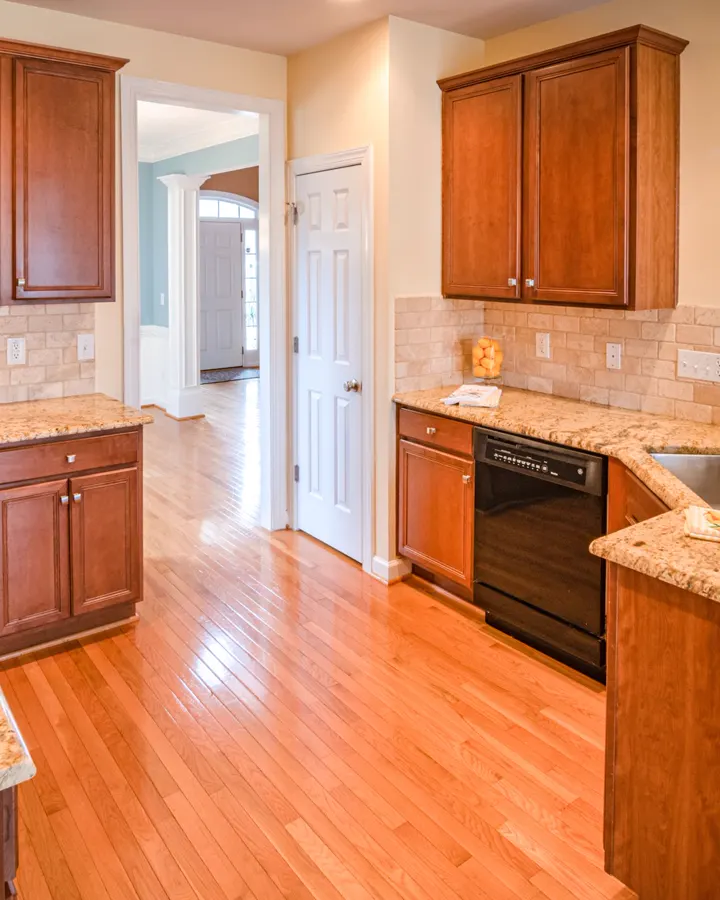
Lifetime warranty on our workmanship.
If the work we did fails, we come back and fix it. That holds for as long as you own the home. On a reface it means one thing. The bond. If the skin lifts because of how we prepared the frame, that is ours. It does not expire.
A warranty is only worth what its exclusions say. Ours are above, in the same size type as the promise. Ask whoever you are talking to how long theirs runs, and get the number in writing.
Questions we actually get asked
Is refacing the same as resurfacing or refinishing cabinets?
Refacing and resurfacing are the same job. New doors, new fronts, and a skin over the boxes. Refinishing is different. It keeps the old doors and changes only the finish, by sanding and painting or staining. If you like your door style, refinishing or cabinet painting may be the cheaper answer.
How long does a refaced kitchen last?
As long as the boxes underneath. A reface done on sound boxes, with the frames prepped to bare material, holds for many years. The doors carry the maker's warranty, and we hand you that paper. What shortens it is heat with no hood and water under the sink.
Can you reface just the uppers, or just one run?
Yes. A partial reface is common when only part of the kitchen shows. The new doors will not match the old ones exactly, so the split is usually by wall or by room. The scope names which boxes are in.
Can I change the door style, not just the color?
Yes. That is the point of a reface. Raised panel to flat, or shaker, or glass in a few uppers. The hinges and the drilling change with the overlay, so the style is chosen before anything is ordered.
Will refacing hide water damage under the sink?
It will hide it for a while, and then the bump comes back. Swollen particleboard keeps moving. We cut it back and rebuild that edge before the skin goes on. If the whole floor of the cabinet is soft, that floor is replaced first.
Do I have to empty the cabinets?
Mostly no. The doors and drawer fronts come off, and the boxes stay in place. Clear the sink base and the front of the shelves, because the frames are being cleaned and glued. Everything else can stay.
The other kitchen services
Where we work
Hillsborough, Pinellas, Pasco, Manatee and Sarasota counties. If your town is not on this list, call and ask: the answer is often yes.
A walkthrough, then a written scope with one closed price.
Never hourly, never a verbal figure, and our workmanship carries a lifetime warranty. Hillsborough, Pinellas, Pasco, Manatee and Sarasota counties.