Laminate flooring installation in Tampa Bay.
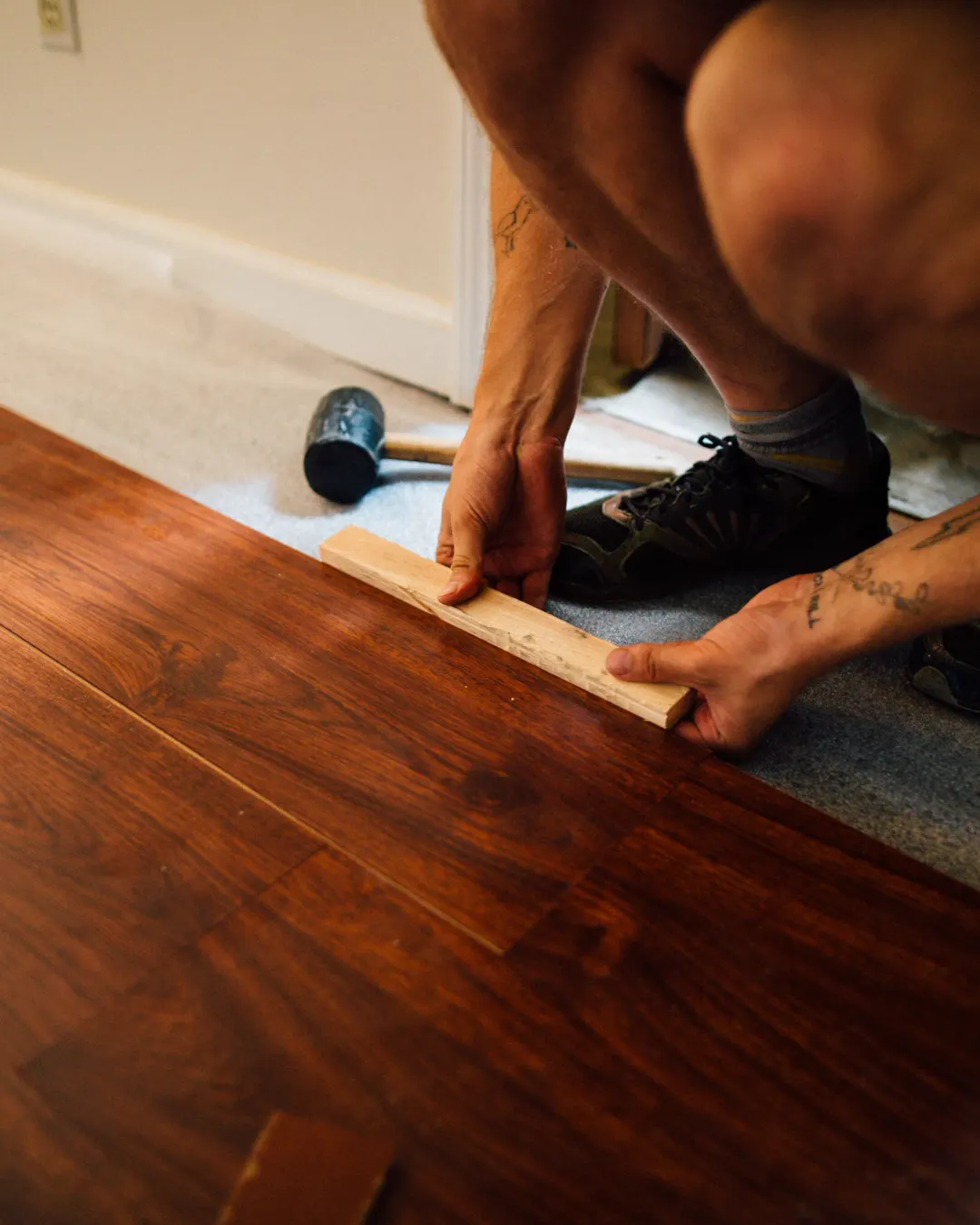
Laminate is a picture of wood glued to a fiberboard core, with a clear wear layer on top. It clicks together and floats over a pad. Done right, in the right room, it is a good wood look floor for less. Done badly, or in the wrong room, the core swells at the joints and the edges lift. The room decides more than the brand.
Priced by written scope, never by the hour.
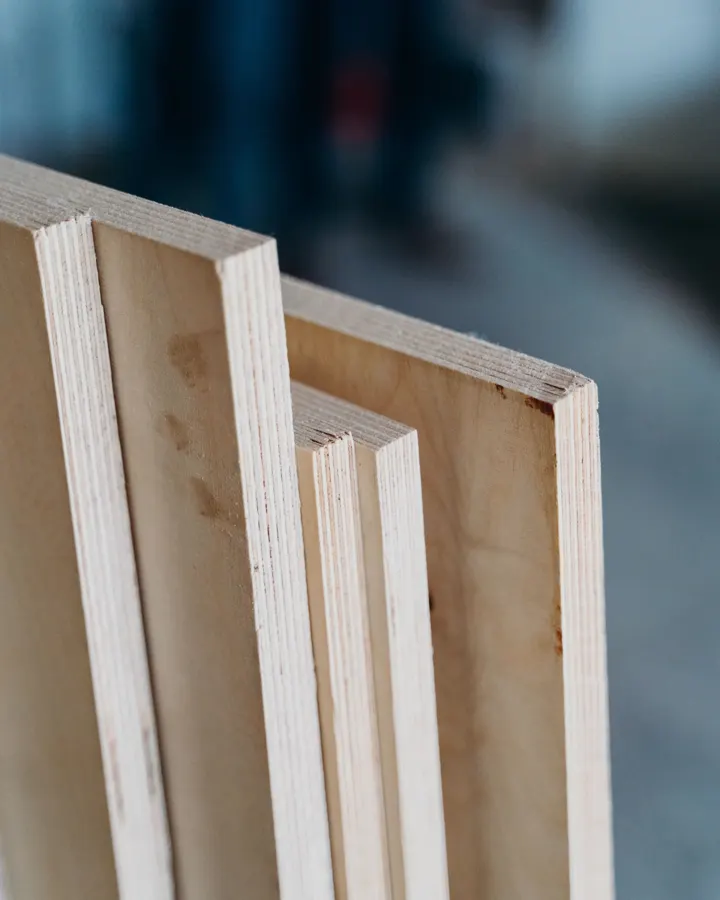
The core is the whole story, and the sample hides it.
Laminate pages show you the top. Oak, hickory, gray wash. The part that matters is the edge of the sample, where you can see the core. Here is what to ask before you hire anyone, including us.
What the core is made of
Most laminate has a high density fiberboard core. It is wood fiber and resin, pressed hard. It is stable and it is cheap. It also drinks water. A wet mop, a pet bowl, a leaking fridge line, and the joint swells and never goes back down.
The AC rating on the box
Laminate is rated for wear from AC1 to AC5. AC3 is the floor of what belongs in a home. AC4 takes dogs, chairs and a busy hall. The rating is on the box. A cheap box is often a low rating, and it shows in 2 years.
The pad is not the same as the vinyl pad
Laminate floats on a foam or cork pad. On a slab, the pad has a vapor film on it, or a separate film goes down first. The maker names it. Skip the film and the core takes in slab moisture from below, slowly, all year.
Where the standard lives
The North American Laminate Flooring Association, NALFA, publishes the test standard and certifies boards that pass it. Look for the NALFA seal. It is not a rule, and it is the one independent test this floor has.
The slab and the room decide the price. The look barely does.
Two rooms can pick the same board and get very different numbers. Here is what actually separates them.
What is coming up
Carpet comes up in an hour. Glued vinyl leaves adhesive that has to be scraped. Old tile leaves thinset that has to be ground. What comes up is the biggest swing in the number.
How flat the slab or the subfloor is
Laminate follows the floor under it. Most makers cap it at 3/16 of an inch over 10 feet, like vinyl plank. Grinding and patching are lines in the scope, priced after the straightedge.
The board rating and the wear layer
An AC4 board with a thick wear layer costs more than an AC3 board. It also lasts longer in a hall or under a dining table. The scope names the rating, so the box you get is the box you priced.
Doorways, stairs and baseboards
Every doorway gets a reducer or a threshold. Stairs are their own job, with nosing pieces. Baseboards come off and go back, or new ones go in. These are counted on the walkthrough, not guessed.
What gets fixed before a board goes down.
A floating floor follows the shape of what it sits on. So the slab is fixed first, and each fix is priced on its own.
The moisture test on a slab
Same as vinyl plank. Probes in the slab, or a calcium chloride dish for 3 days, and the number goes in the scope. Laminate is less forgiving than vinyl, so the limit is tighter.
High spots ground, low spots filled
A 10 foot straightedge finds them. Laminate joints open on a dip and break on a hump. The floor is checked again after the patch.
The vapor film on a slab
On concrete, a vapor film goes down before the pad, or a pad with the film built in. The maker names which one. This is the layer that keeps the core dry from below.
Old adhesive and thinset off
Glue and thinset are not a base for a floating floor. They come off to clean concrete. A board laid over a ridge of old glue clicks and breaks at the joint.
The boxes acclimated
Most makers ask for 48 hours in the room before the lay. The core moves with humidity, and a Florida room in August is not a warehouse. It is a waiting day, and it is in the scope.
What is included, and where it ends.
A written scope is only worth something if it says where it stops. These are the lines we put in writing before a box is opened.
How long the room is out of use.
Laminate lays fast. Carpet to laminate in a dry room is a few working days, and most of that is prep. The boxes sit in the room for the 48 hours most makers ask for. Grinding old thinset adds days. There is no cure wait. You walk on it the day it is done.
When we tell you not to do it
Laminate is the cheap wood look, which makes it easy to sell to a room that will ruin it. Here is where we say no, and why.
It is a bathroom, a laundry room or a kitchen with a history
Standing water swells the core. A bathroom floor sees it every week. A laundry room sees it when the hose fails. Vinyl plank or tile is the floor for those rooms. We say so before you buy the boxes.
The slab reads wet
Laminate takes in slab moisture through the core, slowly, and the joints lift. We do not lay it over a slab that fails the test. Fix the moisture or pick a floor that does not care.
There are dogs and the box is AC3
A big dog on a soft laminate scratches through the picture in a couple of years. Either pick an AC4 board, or pick a vinyl plank with a thick wear layer. We would rather say it now than replace it later.
You want it on a screened porch
Heat and humidity swell the core. Makers exclude rooms with no air conditioning from their warranties. Tile is the floor for that porch.
Lifetime warranty on our workmanship.
If the work we did fails, we come back and fix it. That holds for as long as you own the home. On laminate it means the prep and the lay. If joints open or boards lift because of how we prepared the floor or set the gap, that is ours.
A warranty is only worth what its exclusions say. Ours are above, in the same size type as the promise. Ask whoever you are talking to how long theirs runs, and get the number in writing.
Questions we actually get asked
Is laminate the same as vinyl plank?
No. Laminate has a wood fiber core and a printed picture on top. Vinyl plank is plastic all the way through. Laminate is harder and feels more like wood. Vinyl does not care about water. That one difference decides the room.
Can laminate go in a kitchen?
It can, in a kitchen that is careful. A leak from the dishwasher or the fridge line swells the core before you see it. In a kitchen with a history of leaks, or with kids and dogs, we point you to vinyl plank.
How long does laminate last?
The AC rating and the wear layer decide it, and the room does. An AC4 board in a dry bedroom lasts a long time. An AC3 board in a wet mudroom does not. The maker's warranty is written for the rating, and we hand you that paper.
Can you lay it over tile?
If the tile is flat, solid and the grout lines are shallow, sometimes yes, with a skim over the grout. It raises the floor at the doors. Most of the time the tile comes up.
Does it need to acclimate?
Most makers ask for 48 hours in the room, with the boxes open. The core moves with humidity. Skip it and the joints open or hump in the first summer. It is a waiting day in your scope.
Do you do stairs?
Yes, as their own scope. Stairs need nosing pieces, glue and more cuts per step than a whole room needs per box. They are priced per step, not per foot.
The other flooring services

Where we work
Hillsborough, Pinellas, Pasco, Manatee and Sarasota counties. If your town is not on this list, call and ask: the answer is often yes.
A walkthrough, then a written scope with one closed price.
Never hourly, never a verbal figure, and our workmanship carries a lifetime warranty. Hillsborough, Pinellas, Pasco, Manatee and Sarasota counties.