Exterior painting in Tampa Bay.
Exterior painting in Tampa Bay is a fight with the weather. Sun chalks the old paint. Afternoon rain wets the wall. Humidity slows the dry. Done right, the stucco is washed, the cracks are filled and the chalk is primed. The paint goes on when the surface is dry. Done badly, it peels in sheets by the second summer. The difference is in the wash and the calendar, not the color.
Priced by written scope, never by the hour.
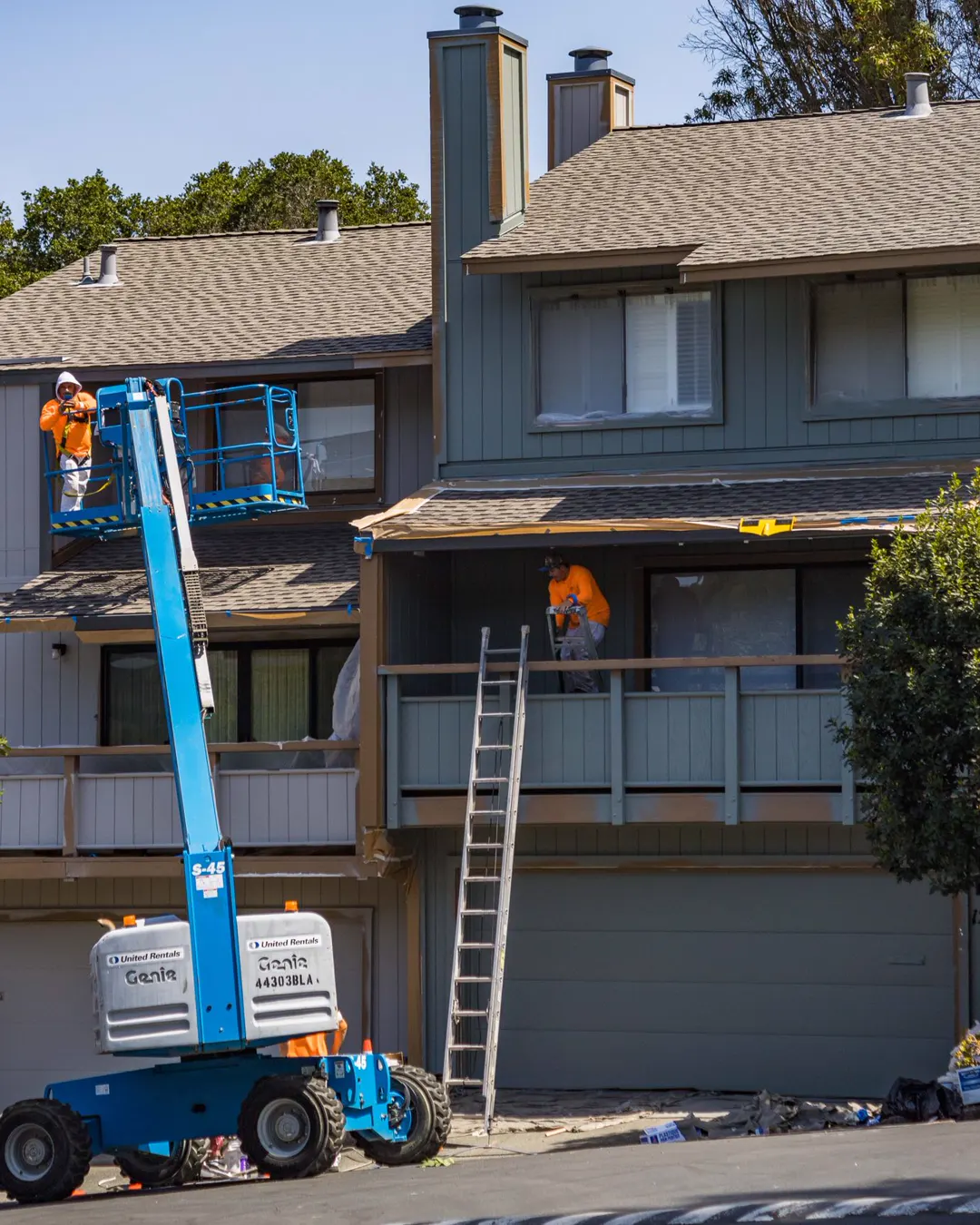
The wall has to be washed first, and most bids skip it.
Exterior pages show you color schemes. None of them talks about chalk, which is what Florida sun turns old paint into. Here is what to ask before you hire anyone, including us.
Wipe your hand on the stucco
If it comes back white, the paint has chalked. Sun breaks the old binder down into powder. Paint over powder sticks to the powder, not the wall. It peels within a year or two. Ask how the chalk is dealt with.
Pressure washing is not the same as cleaning
A pressure washer knocks off dirt and loose paint. It does not remove chalk or mildew by itself. Chalk needs a cleaner and a rinse. Mildew needs a mildewcide wash, or it grows back through the new paint. Ask what is in the wash, not just whether there is one.
The rain rule
Every exterior paint data sheet names a window with no rain and a surface temperature range. In Tampa Bay summers that window closes at 2 in the afternoon most days. Paint applied into a storm washes off or blushes. Ask what happens when the forecast changes.
Where the water gets in
Paint does not stop water. Cracks in stucco, gaps at windows and rotten fascia do the damage. Sealing the cracks and replacing the rot is what protects the house. The paint is the skin over that work. Ask what gets repaired before the color.
The repairs decide the price. The color barely does.
Two houses the same size can price very differently outside. Here is what actually separates them.
Stucco, siding or both
Stucco takes a wash, crack repair and a masonry primer where it chalks. Siding takes scraping, sanding and spot priming. Fascia and soffits are the third surface. Each one has its own prep and its own line.
How much is chalking, cracked or rotten
A house with sound paint and a few hairline cracks is a light prep. A house with chalk, spider cracks and soft fascia is a heavy one. The repairs are the swing in the number. The walkthrough counts them wall by wall.
Height and access
A one story ranch is painted from the ground and a ladder. A two story with a pool cage and a lanai needs a lift and more masking. Access is real time, and it is in the scope.
Doors, shutters and trim
The body of the house is the fast part. Doors, shutters, garage doors and every foot of trim are cut by hand in a different color. They are priced by the piece and the foot, not by the wall.
What gets fixed before the first coat.
Paint follows the wall under it, chalk and cracks included. So the wall is fixed first, and each fix is priced on its own.
The wash
The whole house gets washed with a cleaner that lifts chalk. A mildewcide in the wash kills the growth in the shade lines. Then it dries. A wet wall does not take paint. That is a day in the plan.
Cracks filled with the right filler
Hairline stucco cracks get an elastomeric patch that moves with the wall. Wider cracks are cut and filled. A crack painted over with no filler is a crack that shows through by the first rain.
Rotten fascia and soft wood replaced
Fascia boards and window trim rot from the ends. Paint over rot holds for a season. The soft wood is cut out and replaced first, and it is its own line, priced when we see it.
Caulk at windows, doors and joints
Every gap where two materials meet gets a fresh bead of exterior caulk. It is what keeps water out. It is also where the paint fails first if it is skipped.
Primer where the wall needs it
Chalky stucco gets a bonding masonry primer. Bare wood gets an exterior wood primer. Rust on metal gets a rust primer. Sound painted surfaces do not need primer, and we do not charge for it there.
What is included, and where it ends.
A written scope is only worth something if it says where it stops. These are the lines we put in writing before a can is opened.
How long the house is in progress.
Outside, the weather sets the days, and we do not argue with it. The wash needs a dry day after it. Every coat needs the window the data sheet names, with no rain and the surface in the temperature range. In Tampa Bay summers that means early mornings and days lost to storms. Your scope has the dates and the weather rule written in.
When we tell you not to do it
Exterior paint is the skin of the house. That makes it easy to sell over a problem the skin cannot fix. Here is where we say no, and why.
The stucco is coming away from the wall
Tap the wall. If it sounds hollow, the stucco has let go of the block behind it. Paint over that peels with the stucco. It is a masonry repair first, by the trade for it. We say so before any wash.
The fascia is soft and you want it painted anyway
Paint over rotten wood is a bandage on a break. It holds for a season and the rot keeps going under it. The soft boards come out first, or we skip that wall and say so in the scope.
It is the rainy season and you want a date in stone
We can give you a start date. We cannot give you a finish date in July that ignores the sky. If the schedule matters more than the paint lasting, wait for the dry season. We would rather say it than paint into a storm.
The house is from before 1978 and nobody has tested
Scraping old exterior paint on a house from before 1978 can spread lead dust into the yard. The EPA rule applies outside too. The paint gets tested first. If it is positive, the work is done under the lead rule by a firm certified for it.
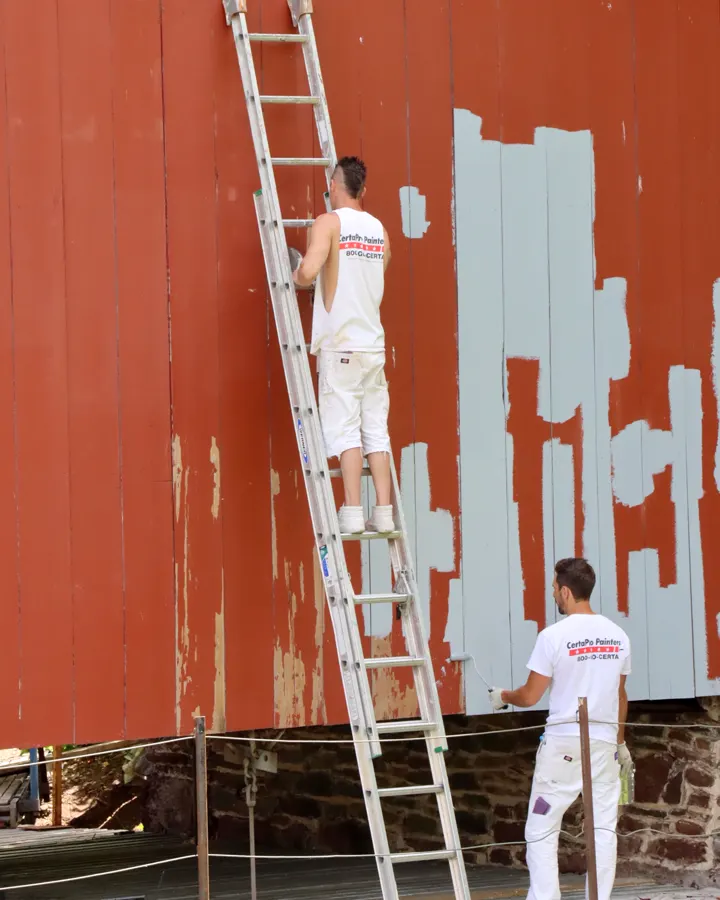
Lifetime warranty on our workmanship.
If the work we did fails, we come back and fix it. That holds for as long as you own the home. On exterior paint it means the surface we prepared and the coats we applied. If the paint peels or flakes because of our wash, our primer or our application, that is ours.
A warranty is only worth what its exclusions say. Ours are above, in the same size type as the promise. Ask whoever you are talking to how long theirs runs, and get the number in writing.
Questions we actually get asked
Is exterior painting the same as house painting?
Outside, yes. Exterior painting is the stucco, siding, fascia, soffits, doors and trim on the outside of the house. Interior is the inside. If you want both, they are two scopes, because the weather rule only applies to one.
How long does exterior paint last in Florida?
The maker's data sheet and the prep decide it. Sun and humidity here are harder on paint than in most of the country. A washed, primed wall with two coats of a premium exterior line lasts far longer than one coat over chalk. The warranty on the paint is the maker's, and we hand you that paper.
Can you paint in the summer?
Yes, early in the day and around the storms. The data sheet names the window with no rain and the surface temperature range. When the forecast closes it, we stop. That is why summer jobs take more calendar days than dry season jobs.
Do you paint the pool cage?
No. The cage is aluminum with screen, and it is its own trade. We protect it and paint around it. We can point you to who does cages.
What about the mildew in the shade?
It gets killed with a mildewcide in the wash, not just knocked off with pressure. Then the paint goes on. It will grow back where the wall stays wet and shaded. The care sheet says how to wash it once a year.
Do you fix the cracks in the stucco?
Hairline cracks, yes, with a filler that moves with the wall. Cracks you can fit a coin in, and stucco that sounds hollow, are masonry repairs first. We tell you which kind you have on the walkthrough.
The other painting services
Where we work
Hillsborough, Pinellas, Pasco, Manatee and Sarasota counties. If your town is not on this list, call and ask: the answer is often yes.
A walkthrough, then a written scope with one closed price.
Never hourly, never a verbal figure, and our workmanship carries a lifetime warranty. Hillsborough, Pinellas, Pasco, Manatee and Sarasota counties.