House painting cost in Tampa Bay.
There is no number on this page. A painting cost without seeing the walls is a guess, and a guess is what moves later. What we can give you is better. The 3 questions that put any painting job in a range. And what a low bid leaves out of the prep.
Priced by written scope, never by the hour.
What a low bid is actually cutting.
Two quotes for the same house come in far apart. The cheap one is not magic. It left things out of the prep, and you find them later as paint that fails. Here is what to look for in any quote, including ours.
The prep, which is most of the job
Patching nail holes, sanding the patches flush, caulking the trim, priming the repairs. A low bid is often one coat over unpatched walls. The paint looks fine for a month. Then every patch flashes through. Ask what the prep line says.
The second coat
Most paint makers call for two coats over a primed surface for full color and wear. A low bid is one coat of a paint and primer in one product, and the old color ghosts through. Ask how many coats, in writing.
The paint itself
A gallon of contractor grade paint and a gallon of a premium line are not the same product. One scrubs clean, one does not. The scope names the product and the sheen, so the can on site is the can you priced.
Protection and cleanup
Floors covered, furniture moved and wrapped, outlets and fixtures masked, every drip caught. These are hours a low bid does not have. You find them as paint on the tile.
The 3 questions that put you in a range.
We will not print a price per room, because it gets read as a promise. But 3 questions decide where any painting job lands. You can answer them before you call.
Inside or outside?
Interior is walls, ceilings and trim, with weather no factor. Exterior is stucco, siding, fascia and doors, with washing, repairs and the Florida sky setting the days. Outside costs more per wall, and it should.
How much repair before paint?
A smooth wall with a few nail holes is a light prep. A wall with peeling, water stains or a bad old patch job is a heavy one. Outside, chalking stucco and rotten fascia are the heavy version. The repair is the swing in the number.
How many colors and how much trim?
One color on the walls is fast. Three colors, an accent wall and every door and baseboard in a different sheen is slow. Trim is priced by the foot, not the wall, and it is the slow part. The scope counts it.
The fourth question, which is ours
What the old paint is hiding. Water stains that come back, a wall that was never primed, lead paint in a house from before 1978. We cannot see it from a photo. We can see it at the walkthrough.
What happens before the first coat.
The price is written before the work starts. These are the things that get settled first, because they are what make the number hold.
A walkthrough of the real rooms
We look at every wall in daylight, run a hand over the trim, and check the ceilings for stains. Outside, we wipe the stucco and press the fascia. It takes about an hour. Everything in the scope comes from that hour.
A written scope, line by line
Every room and every surface is listed. What is in, what is not, how many coats, and what gets repaired first. The not in list is the honest part. It is what keeps the price from moving later.
One closed price
One number for the written scope. It does not move unless you change the scope, or a wall hides something. Hidden damage is priced only after it is visible, never guessed.
Milestones tied to stages you can see
Payments are tied to stages. Signing, prep done, paint on, final walkthrough in daylight. You pay for what you can see. Nobody pays for a promise.
The paint named in the scope
Brand, line, sheen and number of coats, wall by wall. It is how you know the can on site is the can you paid for. It is also how the touch up kit we leave still matches in 5 years.
What is included, and where it ends.
Every painting scope on this site says where it stops. These are the boundaries we put in writing before anyone starts.
How long the room is out of use.
Inside, a room is out for the days it is patched, primed and painted. The recoat time comes from the product data sheet, not from us. Outside, the weather sets the days. Stucco has to be dry and rain has to be hours away. The surface has to be inside the temperature range on the can. Your scope has the dates and the weather rule.
When we tell you not to do it
Paint is the cheapest way to make a house look fixed. That makes it easy to sell to a wall that needs something else first. Here is where we say no, and why.
The wall is wet or the stain keeps coming back
Paint over a water stain hides it for a season. If the stain is from a roof leak or a pipe, the leak gets fixed first. The trade licensed for it does that part. Then we paint. Otherwise you pay for the same wall twice.
The house is from before 1978 and nobody has tested
Old paint may contain lead. Sanding it without the EPA's rules puts dust in your house. The test comes first. If it is positive, the work is done under the lead rule by a firm certified for it. It is its own line.
The exterior is chalking and you want one coat
Wipe a hand on the stucco. If it comes back white, the surface is chalking. Paint over chalk peels within a year. It gets washed and primed with a bonding primer, or we do not paint it.
You are selling and only the front shows
Paint the front and the rooms buyers see. A whole house paint before a sale rarely pays back. We would rather price the part that shows than sell you the part that does not.
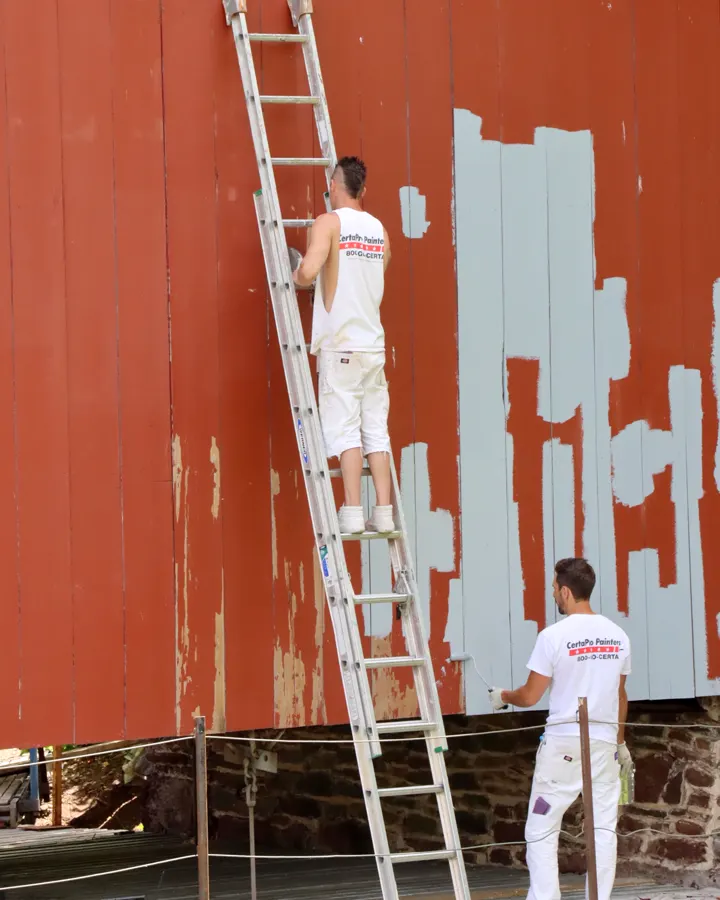
Lifetime warranty on our workmanship.
If the work we did fails, we come back and fix it. That holds for as long as you own the home. On paint it means what we did to the surface. If the paint peels, flakes or flashes because of how we prepared or applied it, that is ours.
A warranty is only worth what its exclusions say. Ours are above, in the same size type as the promise. Ask whoever you are talking to how long theirs runs, and get the number in writing.
Questions we actually get asked
Is an estimate the same as a quote?
Not always, and the difference costs money. An estimate is a guess and it can move. A quote is a price for named work. What we give you is a written scope with one closed price. Ask any painting company which of the two you are holding.
Why will you not publish a price per room?
Because the room is the cheap half. Patching, sanding, priming, trim and protection are the other half, and they change wall by wall. A per room number gets read as a promise. We give you a number after we see the walls. It holds.
Do you charge by the hour?
Never. Every painting job is priced by written scope. An hourly price gives you no number to plan around, and nobody a reason to finish.
What makes the price go up after signing?
Only a change you ask for, or something the old paint was hiding. A change is priced in writing before it happens. Hidden damage is priced only after it is visible. Nothing else moves the number.
Can I buy the paint myself?
Yes, if you buy what the scope names. Brand, line and sheen change how the paint covers and how the second coat lays. If you want, we buy it under the written scope, so the can is ours to answer for.
Is the walkthrough free?
Yes. It is how we get to a real number. It takes about an hour, and you get the written scope after it. There is no charge and no obligation.
The other painting services

Where we work
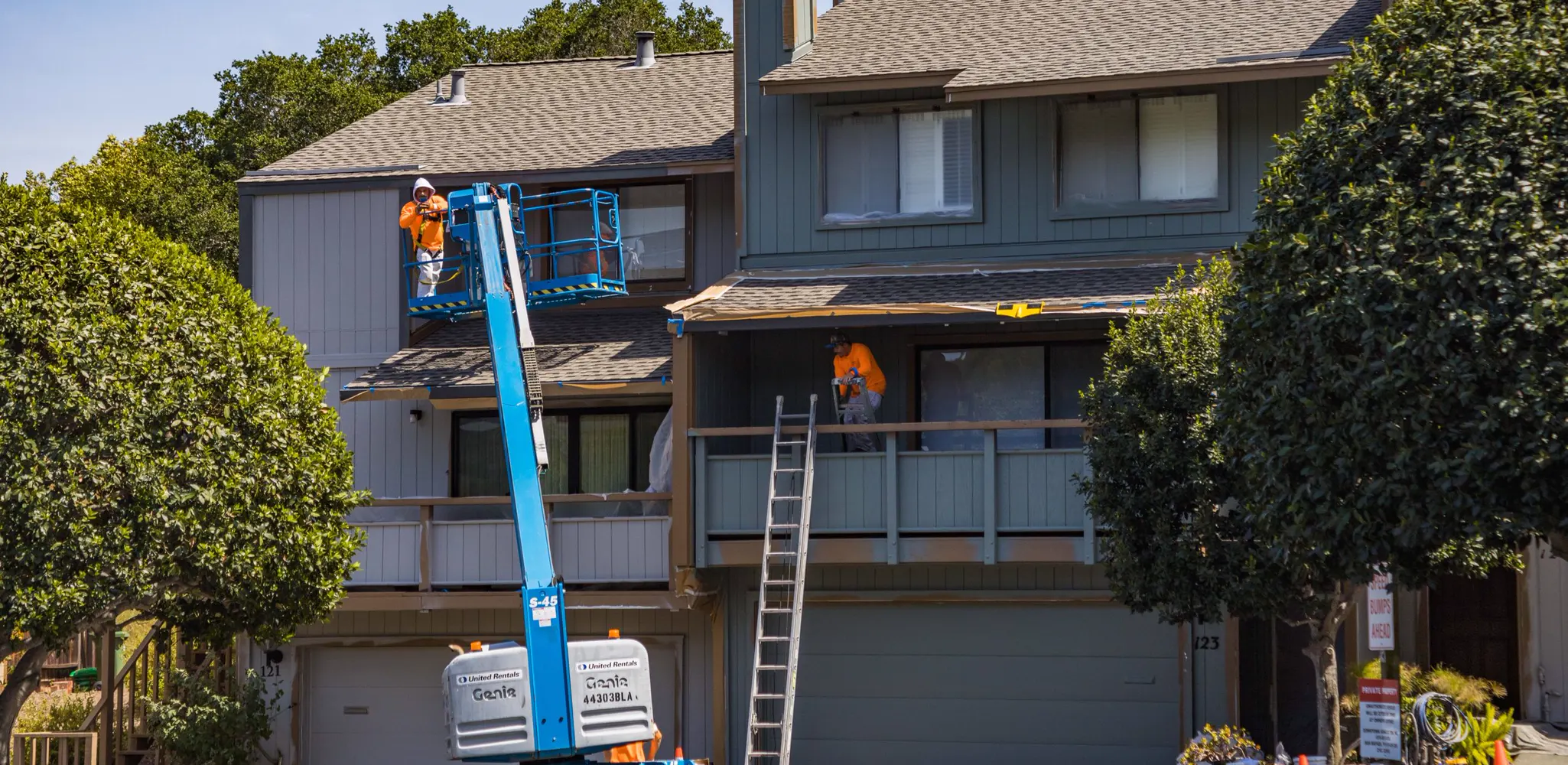
Hillsborough, Pinellas, Pasco, Manatee and Sarasota counties. If your town is not on this list, call and ask: the answer is often yes.
A walkthrough, then a written scope with one closed price.
Never hourly, never a verbal figure, and our workmanship carries a lifetime warranty. Hillsborough, Pinellas, Pasco, Manatee and Sarasota counties.