Cabinet painting in Tampa Bay.
Cabinet painting keeps every door and every box and changes only the finish. It is the cheapest way to change a kitchen. It is also the easiest to ruin. A cabinet is touched a hundred times a day, near grease and steam. A finish brushed over grease chips at the first fingernail. Done right, the doors come off and get cleaned to bare, sanded, primed and sprayed. The difference is in the degreaser and the primer.
Priced by written scope, never by the hour.
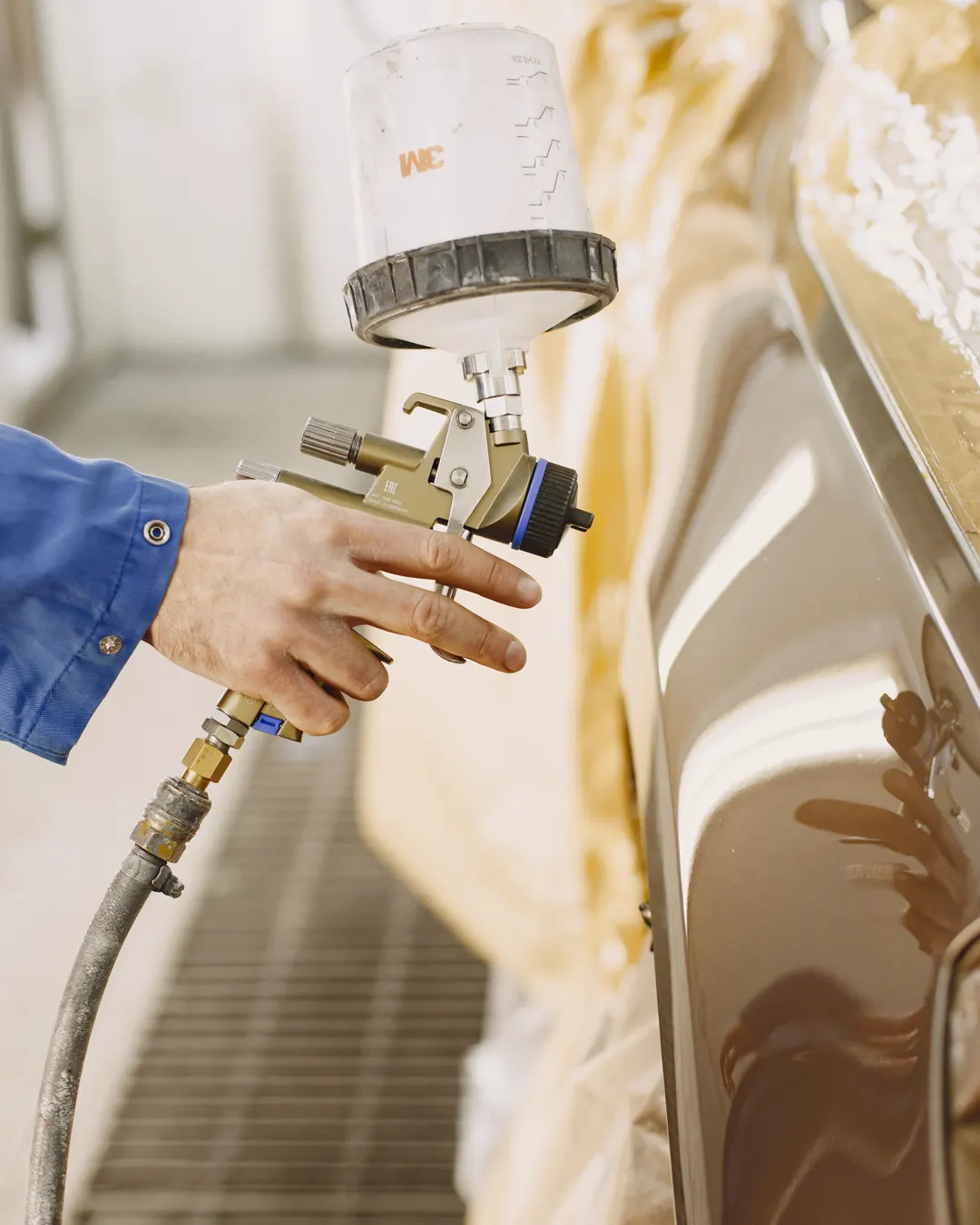
The doors come off, or it is not the job.
Cabinet painting pages show you before and after photos. None of them shows the doors lying flat in a spray booth, which is how the after photo happens. Here is what to ask before you hire anyone, including us.
A brushed door shows every stroke
A door painted in place, hanging on its hinges, gets brush marks and drips at the bottom edge. It also gets a line where the hinge was. A door laid flat and sprayed gets a factory finish. Ask whether the doors come off and where they are sprayed.
Grease is the enemy of every finish
Kitchen cabinets carry a film of cooking grease you cannot see. Paint sticks to the grease, not the wood. The first fingernail lifts it. Every door and frame is degreased, then sanded, then cleaned again. Ask what the degreasing step is, in words.
The primer decides the bond
Old cabinets are often stained and sealed with a hard finish. A bonding primer is what grips that surface. Skip it, and the paint peels in sheets when a drawer is slammed. Ask which primer, by name.
Cabinet paint is not wall paint
Wall paint stays soft and scuffs. Cabinet finishes are harder. Urethane modified alkyds and waterborne enamels made for cabinets cure to a hard shell that takes fingernails and cleaning. Ask what product is going on, by line, not by brand.
The number of doors decides the price. The color barely does.
Two kitchens the same size can price very differently for paint. Here is what actually separates them.
How many doors and drawer fronts
Priced by the piece. A galley with 14 doors and a big kitchen with 40 doors are not the same job. Count yours before you call. It is the fastest way to a real range.
What the finish is now
Painted cabinets take less prep than stained and sealed ones. Glossy factory finishes need more sanding and a stronger primer. Oak with an open grain needs filler if you want it smooth. The walkthrough reads the finish and names the prep.
Sprayed in a booth or on site
Doors sprayed in a shop get the cleanest finish. Frames are sprayed or brushed in the kitchen inside a sealed enclosure. Both take masking, extraction and time. The scope names which is which.
New hinges and hardware
Painting is a good time to swap old hinges for soft close and old handles for new ones. Filling the old holes and drilling new ones is a line for each door. It is optional, and it is common.
What gets fixed before the first coat.
A finish follows the surface under it, grease and dents included. So the surface is fixed first, and each step is priced on its own.
Doors off and labeled
Every door and drawer front comes off, gets a number, and goes to the spray area. The hinges and hardware come off too. Nothing is painted around anything.
Degreased twice
Once with a degreaser to lift the film. Then a scuff sand. Then a solvent wipe to lift what the sanding freed. A frame wiped once still has grease in the grain. It is slow, and it is the job.
Dents and old holes filled
Chips, dents and old handle holes get filled and sanded flush before primer. On oak, the grain gets filled if the scope says smooth. Otherwise the grain shows through, and some people want that.
Bonding primer, then sanded again
The bonding primer goes on, cures, and gets a light sand so the topcoat lays flat. A primer that is not sanded shows every bit of texture through the color.
The kitchen sealed off
Plastic walls and a zipper door around the kitchen, extraction running, floors covered. Spray finish travels. It stays in the kitchen, not on the couch.
What is included, and where it ends.
A written scope is only worth something if it says where it stops. These are the lines we put in writing before a can is opened.
How long the kitchen is out of use.
The doors are gone for the days it takes to prep, prime, spray and cure them. The boxes stay, so the kitchen works with open shelves. The frames are sprayed in a day or two with the kitchen sealed. Then the doors come back. Cure time comes from the product data sheet, and until then the finish is soft. Your scope has the dates.
When we tell you not to do it
Painting is the cheap answer, which makes it easy to sell to a kitchen that needs the expensive one. Here is where we say no, and why.
The boxes are soft or falling apart
Paint on a rotten box is paint on a rotten box. If the sink base floor is gone or the sides are swollen, that run is done. New cabinets are the honest answer for it.
The doors are thermofoil or peeling laminate
Paint does not bond well to vinyl film, and it will not fix a laminate that is lifting. Thermofoil doors that are peeling get replaced, not painted. New doors on the old boxes is the job, and we say so.
You want it smooth and the doors are oak
Oak has an open grain that shows through paint as texture. Making it smooth means grain filler on every piece, and it doubles the prep. If smooth is the goal, price the filler, or pick a door replacement in a closed grain wood.
You want a different layout or a different door style
Painting keeps every door where it is and as it is. If you want shaker doors on raised panel boxes, that is new doors. If you want the sink moved, that is new cabinets. Paint cannot do either.
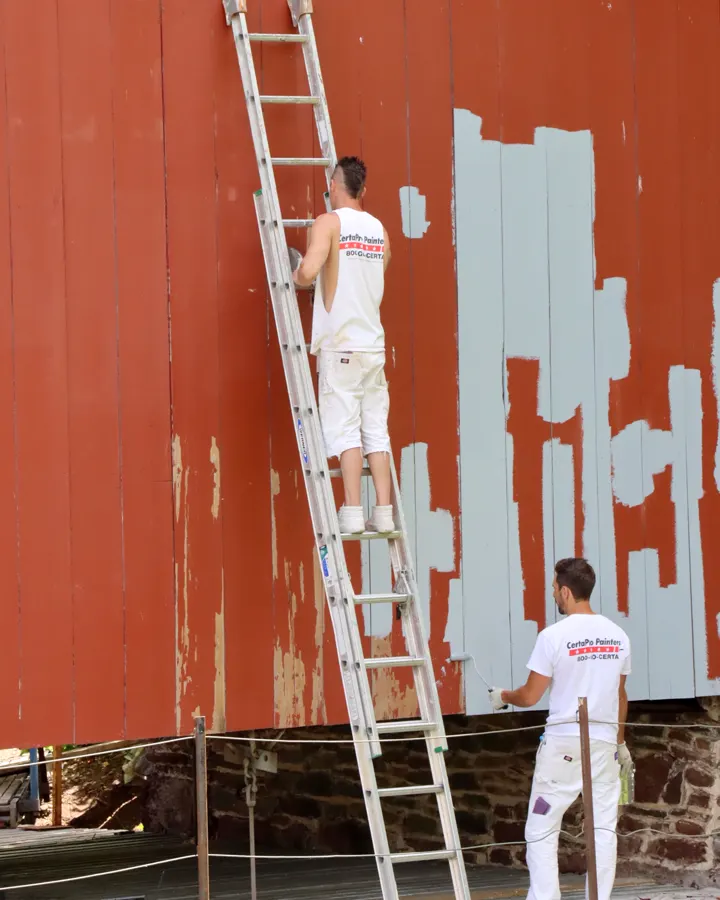
Lifetime warranty on our workmanship.
If the work we did fails, we come back and fix it. That holds for as long as you own the home. On cabinet paint it means the bond. If the finish peels, lifts or chips down to the old surface because of our prep, that is ours. The same goes for our primer.
A warranty is only worth what its exclusions say. Ours are above, in the same size type as the promise. Ask whoever you are talking to how long theirs runs, and get the number in writing.
Questions we actually get asked
Is cabinet painting the same as cabinet refinishing?
Mostly yes. Refinishing is the trade word for sanding a cabinet and giving it a new finish, painted or stained. Cabinet painting is the painted version. Refacing is different. It puts new doors and a new skin on the boxes. We do both, and the walkthrough tells you which one your kitchen needs.
How long do painted cabinets last?
As long as the prep was honest. A degreased, sanded and primed cabinet in a hard enamel holds up to daily use for years. A brushed coat over grease does not make it to the first birthday. The finish carries the maker's warranty, and we hand you that paper.
Do the doors really have to come off?
Yes. A door sprayed flat gets a factory finish and no drips. A door painted hanging gets brush marks and a line at the hinge. It is the difference between a kitchen that looks painted and one that looks new.
Can I use the kitchen while the doors are gone?
Yes. The boxes stay, so you have open shelves. The frames are sprayed in a day or two with the kitchen sealed, and we name that day. The sink and the range work the whole time except that day.
Can you paint oak cabinets smooth?
Yes, with grain filler on every piece, and it doubles the prep. Without it, the oak grain shows through the paint as a light texture. Some people like that. The scope says which one you are getting.
Should I paint or replace the doors?
If the doors are solid wood or MDF and you like the style, paint them. If they are thermofoil, peeling, or a style you hate, replace them. If the boxes are soft, neither one. We tell you which case you have on the walkthrough.
The other painting services

Where we work
Hillsborough, Pinellas, Pasco, Manatee and Sarasota counties. If your town is not on this list, call and ask: the answer is often yes.
A walkthrough, then a written scope with one closed price.
Never hourly, never a verbal figure, and our workmanship carries a lifetime warranty. Hillsborough, Pinellas, Pasco, Manatee and Sarasota counties.